WHERE WE BECOME
By Nirel Sithole
Where We Become, a solo exhibition by Tusevo Landu, is a recollection of the many fragments of life that come to inform one’s being. Home is where we can truly find the blueprints of ourselves. The intricacies of who we are, shaped by the many facets of our lives. The immaterial qualities that shape our sense of self, our perspectives and our sensibilities. What is more fascinating is how different we are to one another whilst existing within the same anatomical framework. The artist believes, “What makes you who you are is your home, your environment and your upbringing.” So what is it then that renders us so distinctive? With his fourth solo exhibition, Landu enters this conversation, vulnerably using his own life to explore Where We Become.
Reflecting on his most personal body of work to date, Landu says, “These paintings are memories of who I am as a person.” On a surface level, home is a place of refuge. With this collection, Landu reminds us that the honesty of life is lived out within the comfort of our homes. Health and wellness journalist Hilary I. Lebow states that “Memories don’t just live in the past. They live in the present.” Within the intimacy of our homes, we exist in a vault of memories that continue to unfold, extending the thread of our unfiltered narratives. The artist further grounds this sentiment, saying, “Your home knows you better than you know yourself, the walls just don’t talk.”
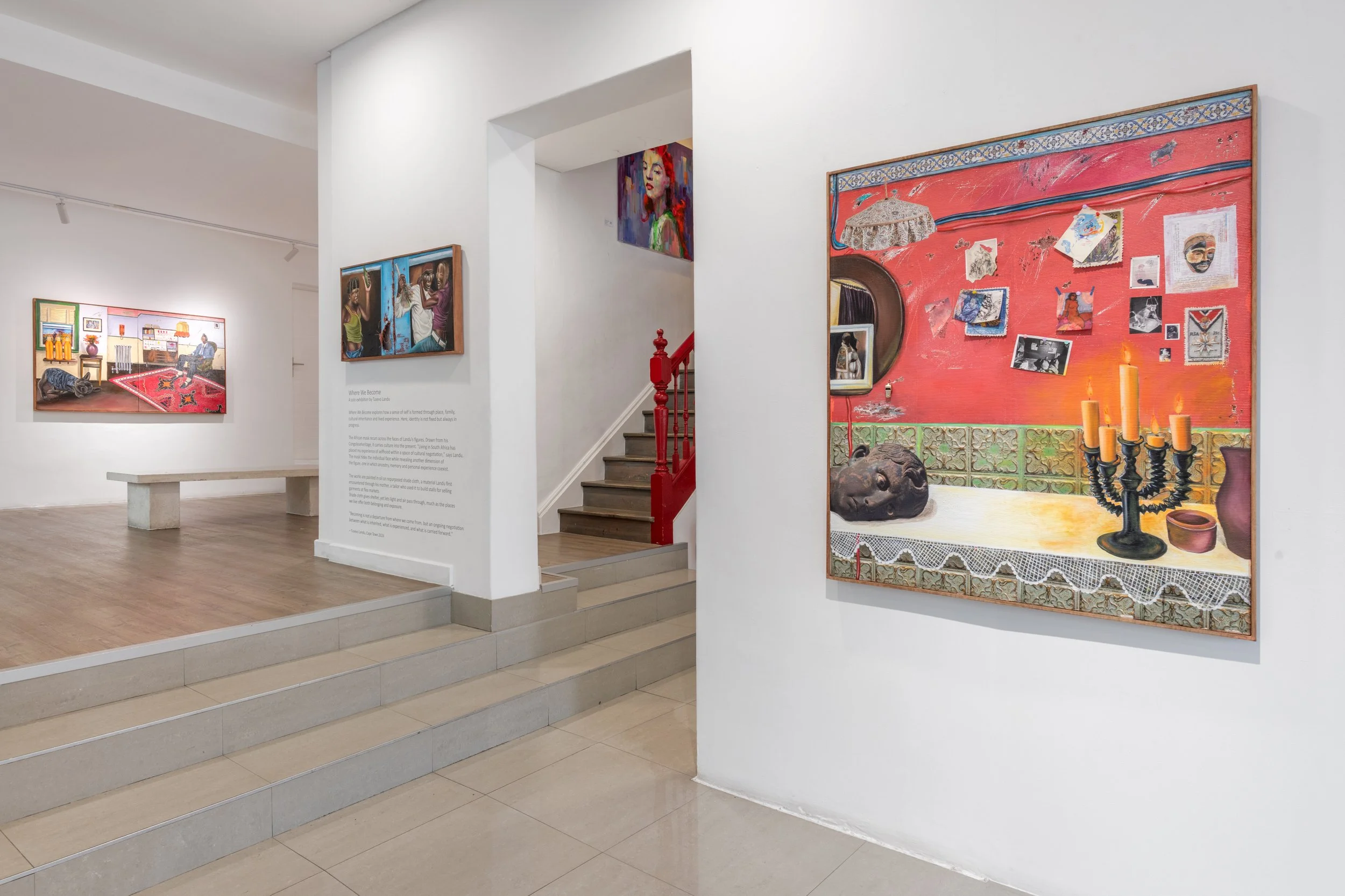
Landu connects his personal history with found and everyday materials through the use of shade cloth and oil paint, creating artworks that give form to the memories that remain present with him. This body of work explores memory, identity, reflection and the experience of migration. Memory becomes an internal projection of who we are and of the intangible inheritances we carry with us. With paintings such as My Ghetto Love Song, It Goes On, And On, And On, And On, (Family Portrait), Landu gives us a glimpse into his inner world through images rooted in his childhood memories. What appears to be a carefully considered arrangement of images and sentimental objects reveals some of the influences that shaped Landu’s creative practice, featuring images of the artists who inspired him while growing up: Dumile Feni, Albert Adams, Irma Stern and Georgina Gatrix.
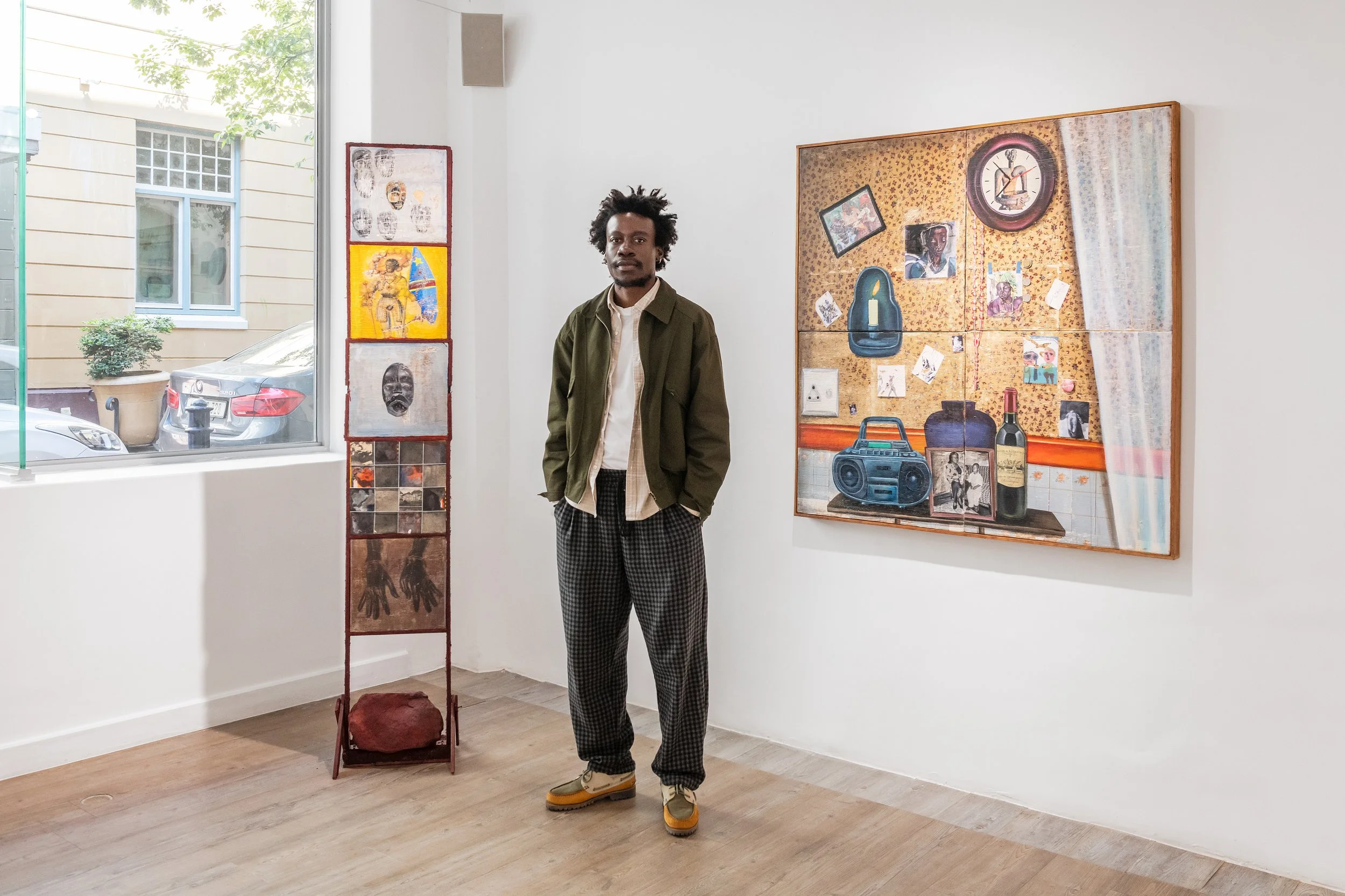
Landu layers details from his lived experience throughout the painting. At the bottom centre, a photograph of a young Landu with his mother and younger brother becomes a focal point, from which the rest of his memories emerge. These items hold a particular significance for the artist. “The clock represents the borrowed time we are on,” he says. Landu further reflects on the clock through his experience as an immigrant: “You are always thinking of your visa, always aware that your time is running out,” he continues. The coins emphasise financial struggle. “When you’re hungry and have nothing at all, you start reaching for any coin you have,” he states.
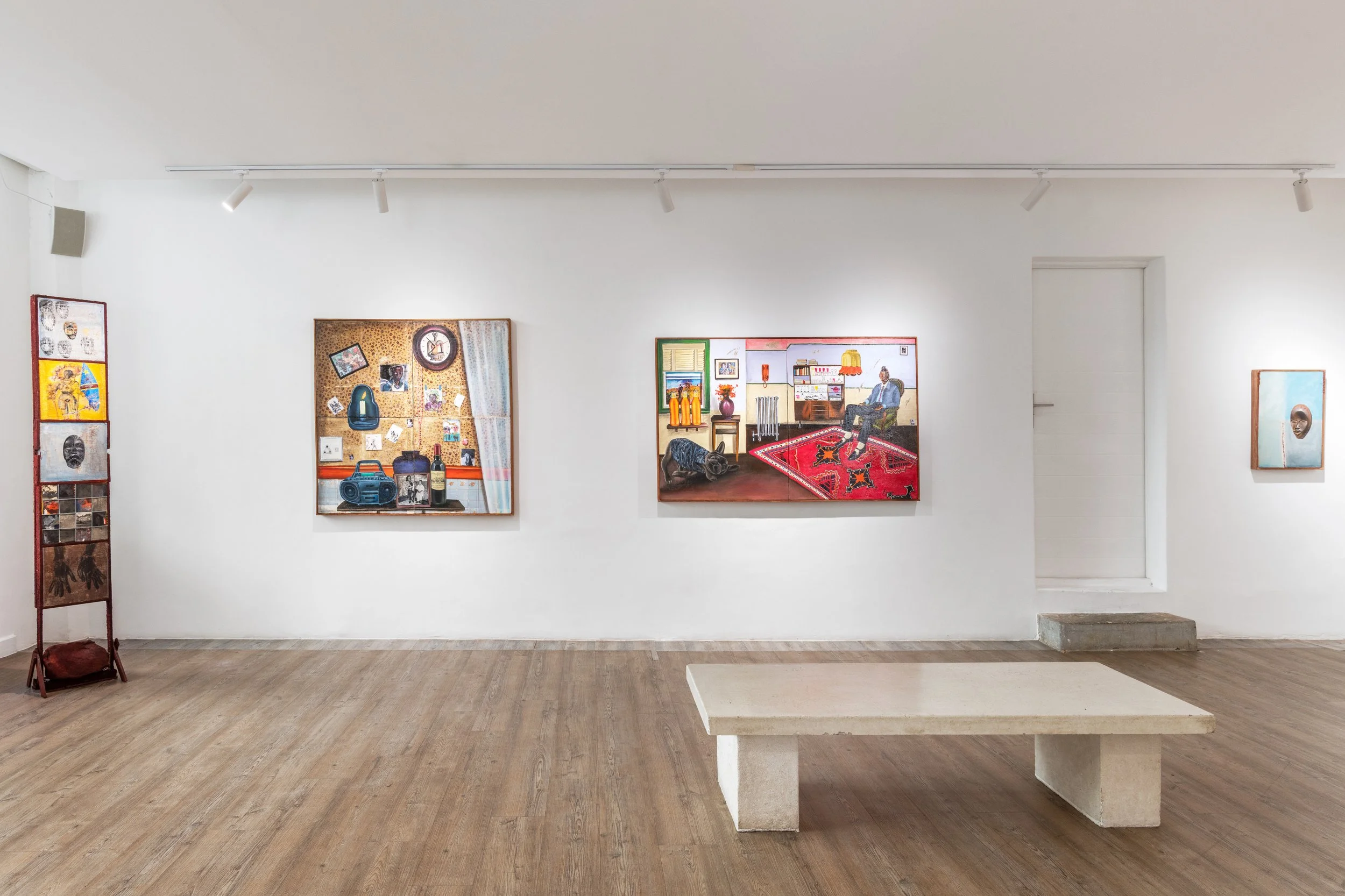
The radio is a reference to his mother, who worked as a seamstress and would often have the radio playing while she sewed. Shade cloth also carries a direct connection to his mother’s practice, as she would use the material in her work as a seamstress. Its presence throughout the exhibition therefore extends beyond its function as a painting surface, grounding the works in an active engagement of memory. Through this connection to his mother, Landu uses the past as a tool for the present, allowing memory to exist not only within the imagery of the paintings, but also within the surfaces that hold them.
Memories do not always arrive with the vivid clarity of Landu’s paintings; they can often appear unclear, fragmented and ever-changing in focus. The paintings, like memory, are not without texture. These textures bring forth a sense of realness, drawing the unclear fragments of our memory closer to our immediate recollection.
Landu’s conversation with memory is further informed by his experience of migration. Having arrived in South Africa from the Democratic Republic of the Congo in 2006 at the age of nine, Landu experienced family, belonging and community from a distance. “I grew up without cousins because I am away from home in a foreign land. So some figures in my paintings are about distant family members,” he says. “Some I have only seen in photographs, some I have only heard of,” he continues, speaking to the blurred and indistinct faces that appear in paintings such as What Remains Across Distance.
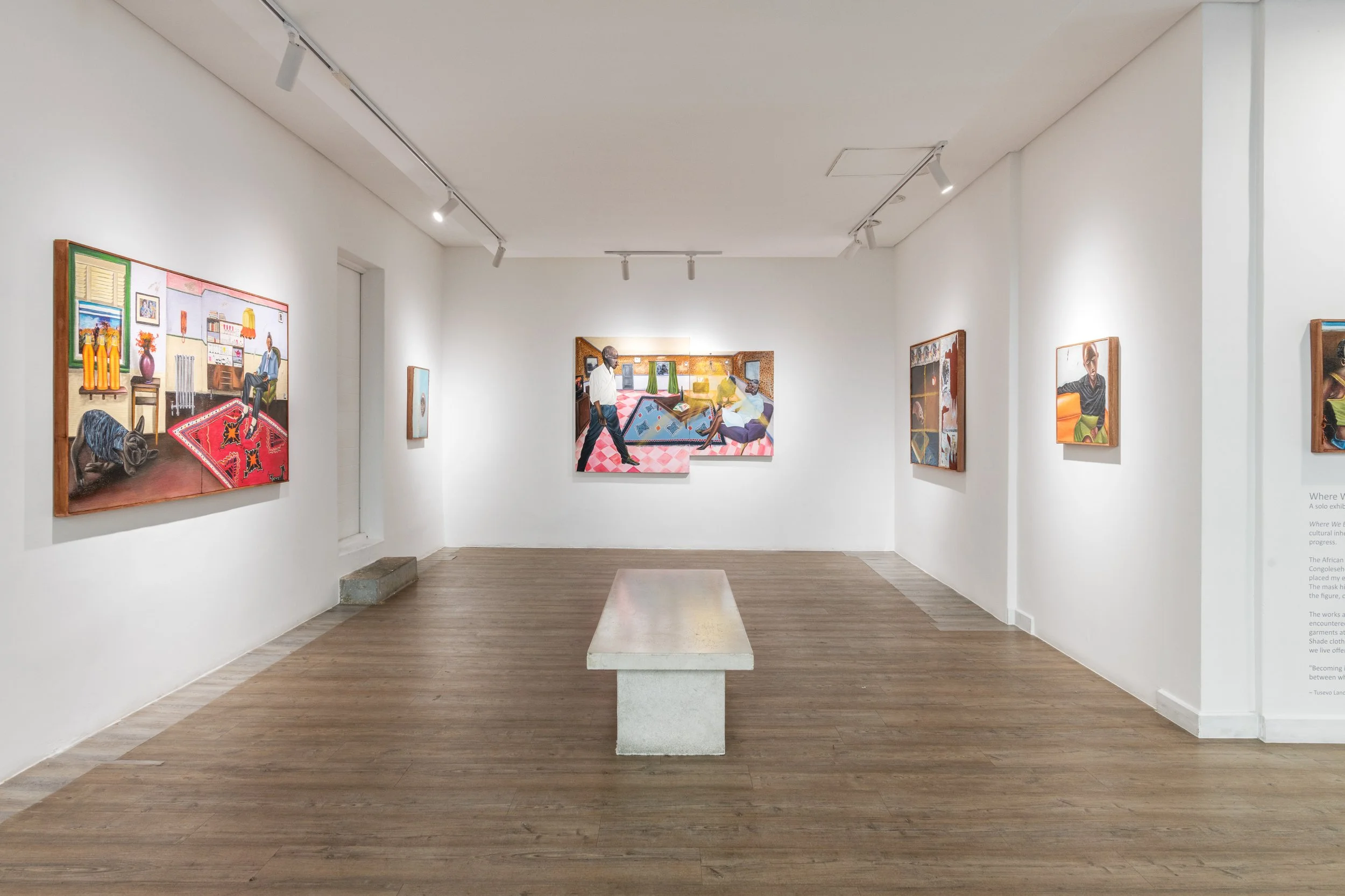
In this sense, memory becomes fragmented and at times unkind to our efforts of preserving certain narratives, thus revealing itself as an uncontrollable force that exists beyond our desire to recollect. Yet Landu recognises that memory is also lineage and DNA, carrying the intangible essence of those we may never meet. Bridging memory with identity, Landu speaks of A Rhythm Called Home, saying that “for the African, dancing is a part of our collective memory and identity. We have that. Our memory is communal.”
With Where We Become, Tusevo Landu offers a profoundly personal glimpse into his life, reminding us that it is not simply about where we come from, but what makes us who we are. Being alive is an endless act of remembering and becoming, so long as we continue to breathe upon this earth. Working from a present perspective, Landu acknowledges memory with honesty, allowing it to work with him throughout his practice. As the artist says, “memory is forever.”
– Nirel Sithole